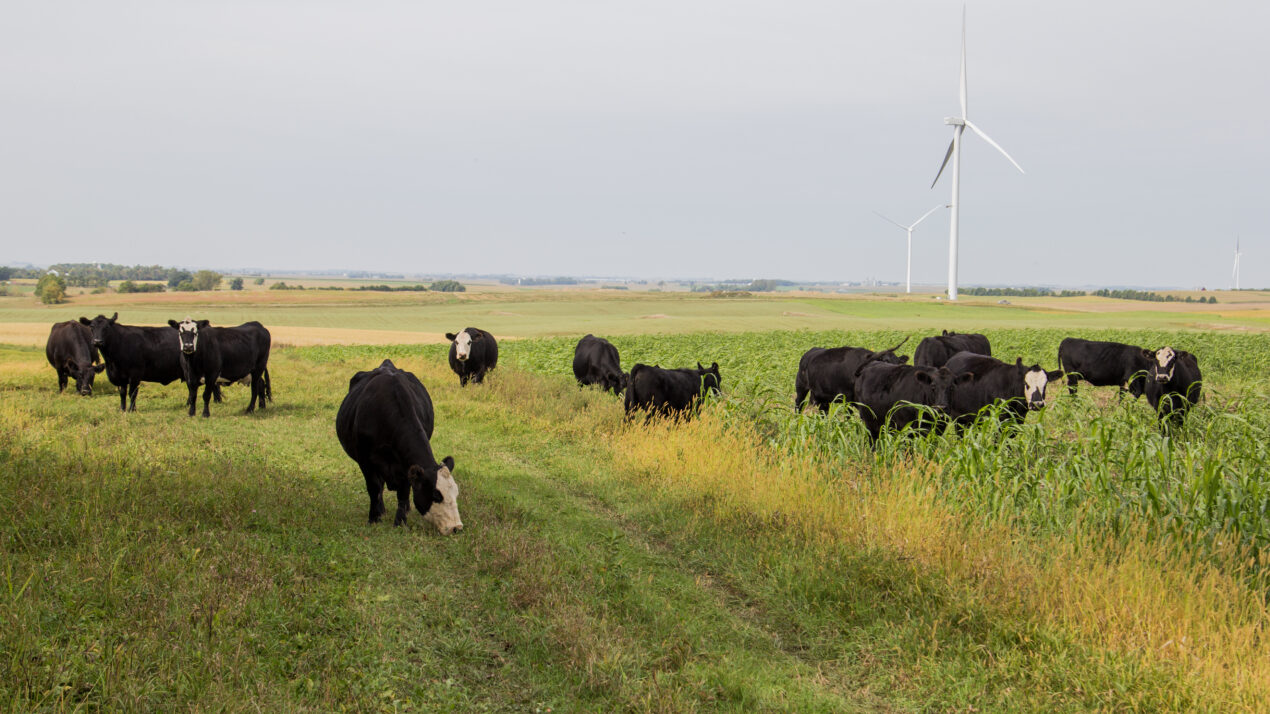
Just a few generations ago nearly all heifers spent part of the year on pasture. Today, many farmers choose not to implement grazing. But there’s good reason for farmers to consider going back to their roots. It’s important to understand the distinctions between managed grazing and other types of grazing management.
“The shift towards sustainable grazing aligns with increasing focus on soil and water conservation and soil health,” explains Jason Cavadini, UW-Extension Grazing Specialist. “Livestock grazing plays a crucial role in promoting soil health by fostering a complete functioning ecosystem.”
He added that getting livestock back on the land has numerous benefits, not just for soil health but also for overall land management. He has been engaging dairy farmers in discussions about incorporating grazing into their operations, which can significantly reduce heifer-raising costs by up to 47 percent.
To further educate farmers and agricultural professionals, UW-Extension has established the Grassland Academy, a training program aimed at enhancing technical knowledge and skills related to grazing management. The academy has seen notable success in its first year and continues to evolve to meet the needs of participants.
Transitioning to perennial forages and adopting managed grazing practices hasn’t been without challenges. Managing livestock through Wisconsin winters, particularly for beef producers without adequate housing facilities, has posed significant hurdles. However, strategies such as out-wintering and meticulous management have helped mitigate these challenges.
“To balance animal nutrition and environmental stewardship, it really all comes down to the three R’s,” explains Cavadini. “Rotation, Residual, and Rest. By rotating animals and maintaining residual forage, the farm not only improves soil health but also safeguards water resources and enhances overall pasture quality.”
He added that managing what you have effectively is just as important as striving for perfection. It’s all about finding a balance that works for your operation.
Looking ahead, Cavadini says UW-Extension is involved in various research projects aimed at improving forage management and grazing systems. These projects include beef grazing studies, dairy heifer comparisons, and plot trials examining forage responses to various management practices. The ultimate goal is to disseminate valuable insights and information to benefit the broader farming community.
Leave a Reply