
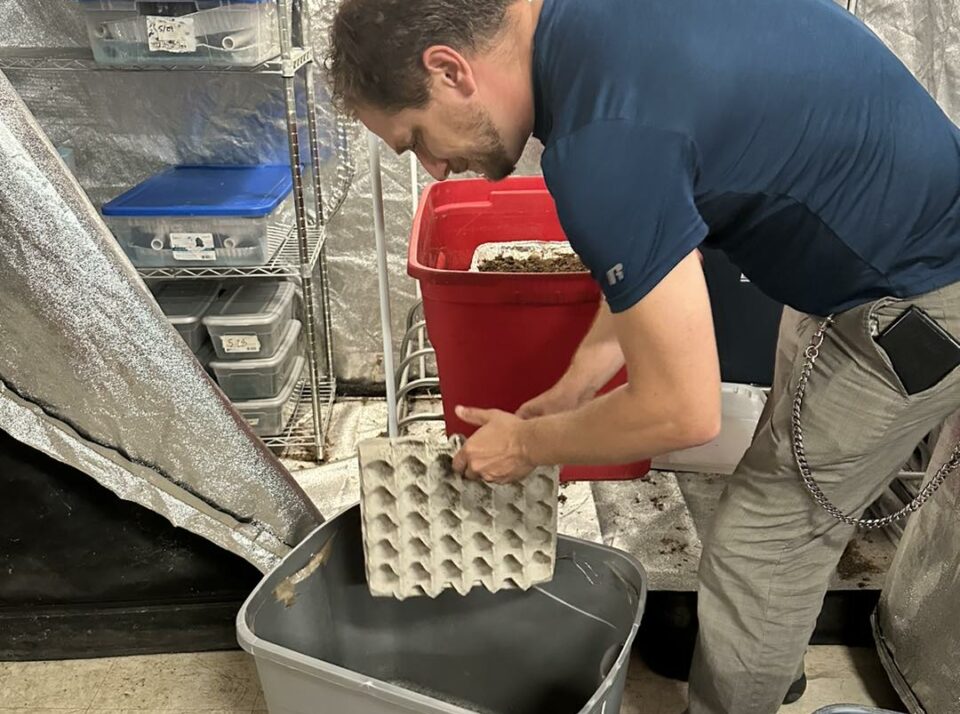
Pictured: Kevin Bachhuber is moving baby crickets to a new home.
What do you think about when you hear ‘animal agriculture’? I bet it’s not crickets.
But believe it or not, insect farming is a piece of Wisconsin agriculture. Kevin Bachhuber owns Madison Cricket Farm in DeForest, where he raises 2 million crickets for live pet food, such as for birds or reptiles. This farm is an extension of Bachhuber’s consulting firm, where he advises other insect farmers that produce bugs for both animal and human consumption.
He says despite the size difference, there’s a lot of similarities between raising insects and the livestock we’re more familiar with like beef or pigs.
“The most crucial things for insects are temperature and humidity. For the crickets, we’re generally doing about 88 degrees Fahrenheit and 30 to 40 percent relative humidity,” Bachhuber says. “The other thing that you have to think about when you’re raising such a high density of animals in such a small space is air flow. They’ll use a lot of oxygen very quickly.”
Bachhuber Consulting works to grow the insect agriculture industry for both animal and human food. Bachhuber says the appetite for bugs in the U.S. has grown about 14 percent in the past 10 years. In other parts of the world, insects are a normal part of the diet.
But Bachhuber says in the animal feed sector, raising insects could be a value-add for an existing farm. He says people usually raise black soldier fly for fish, chicken and pig food. The insect can feed off of waste products, like rotten feed.
“I think of it as raising one of the high cost portions of your feed,” he says, noting that farmers he works with tend to start by thinking they’re going to sell other black soldier fly into the existing market, and then end up using all of their own production for their own animals.
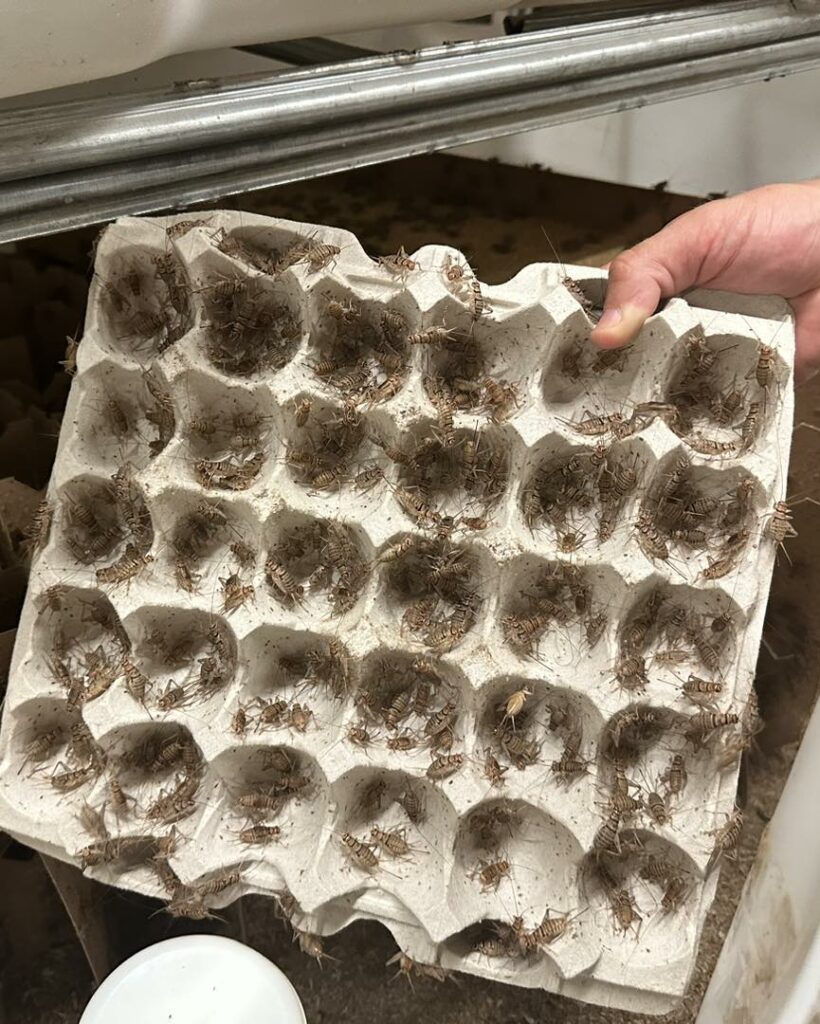
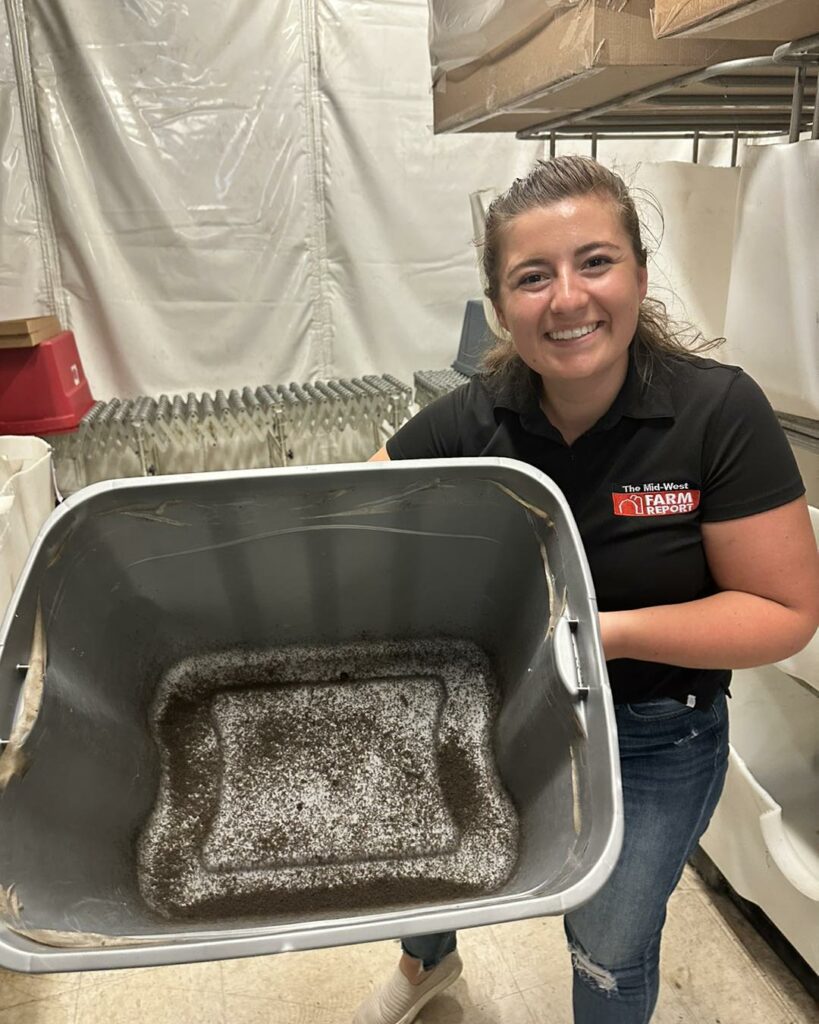
Pictured: Adult crickets on their cardboard ‘apartments’. They look different from your typical backyard cricket because they’re a different breed and have a softer exoskeleton. Stephanie Hoff is holding a bin of baby crickets.
Leave a Reply