
By Teri Barr for the MWFR
Most of our fellow Wisconsinites will enjoy an extra hour of sleep this weekend. But don’t expect the cows to get the memo.
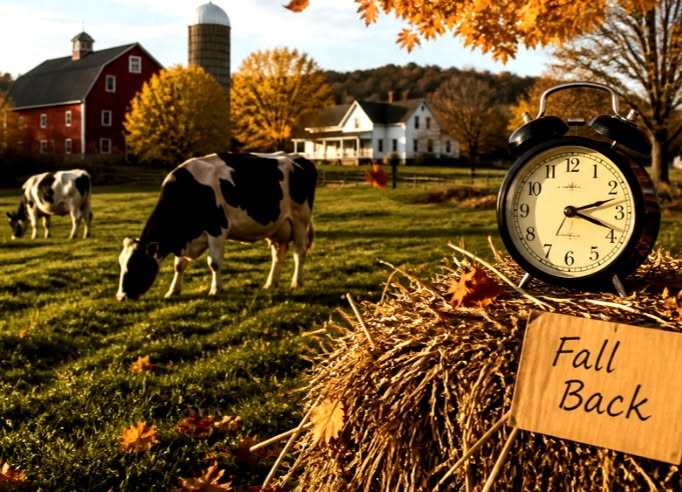
Daylight Saving Time ends Sunday, November 1, at 2 a.m., when clocks fall back one hour. While the change may be welcome for people who enjoy sleeping in, you — as a farmer — may have a different schedule to consider.
Cows don’t care what time it is
Consistency matters.
And if you are on a dairy farm, you know — cows are accustomed to regular milking, feeding, and resting routines. And changing the clock doesn’t automatically change those habits.
Some farmers may gradually adjust the schedules, while others keep barn routines consistent and work around the time change. Farms using robotic milking systems have additional flexibility because cows can visit the milking equipment throughout the day.
Less evening light, more farm safety concerns
If you’re a farmer still harvesting corn or completing fall fieldwork, the time change brings another consideration: sunset arrives an hour earlier, according to the clock.
This means other drivers may encounter those of you on tractors, combines, and other slow-moving farm equipment during evening commutes. Farm safety experts encourage drivers to slow down, watch for equipment entering roadways, and give machinery plenty of room.
Farmers can also help by checking your lights, reflective markings, and slow-moving vehicle signs before heading onto public roads.
Farming doesn’t follow the clock
Whether it’s feeding your livestock, finishing harvest or checking animals overnight, agriculture doesn’t stop when the clocks change.
And while most people will get that extra hour in bed, plenty of farmers will still be heading to the barn. After all, the cows aren’t waiting for anyone to change the clock.
Leave a Reply