
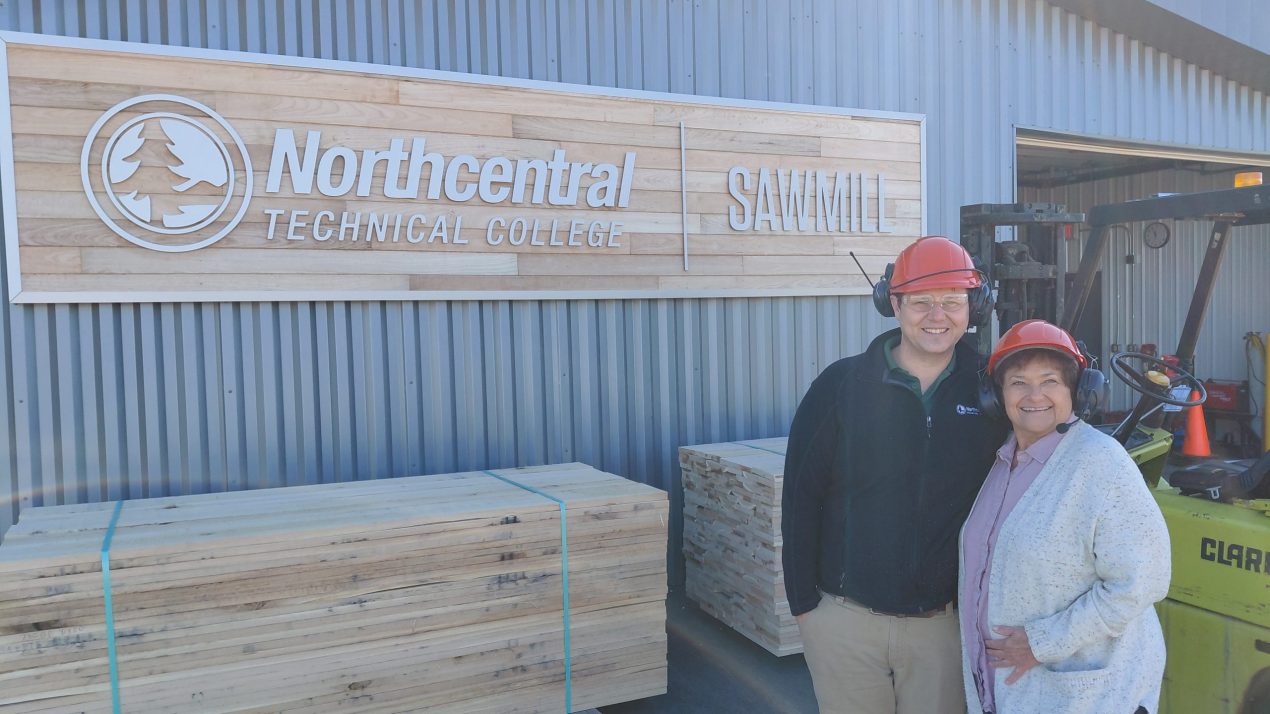
When you think forests and timber in Wisconsin, you probably think mainly about construction materials like 2X4’s. No doubt, softwood used to create those construction materials is important but Wisconsin’s timber industry is deeper than that.
That’s what we learned visiting with Logan Wells, Program Director and Wood Science Faculty member at Northcentral Technical College’s (NTC), Wood Technology Center of Excellence in Antigo. Wells says many people are surprised that hardwood is actually Wisconsin’s mainstay. Hardwood supplies are key in domestic manufacturing. Wisconsin lumber is the key source for things like cabinetry, home trim and hardwood flooring. Wisconsin wood is also preferred for furniture. That makes it a high demand product for global exports. He notes that those export markets help prevent a local supply glut which keeps the states timber industry stable.
Wells says lesser timber from the state will also turn into railroad ties, pallets and other custom wood items.
Training the next generation of wood professionals
As long-time industry workers retire, hands-on technical education has become essential to fill skilled labor gaps. Wells says that’s what the Center of Excellence is all about – specialized training across the entire supply chain. This facility allows for education in all elements the keep mills rolling. Antigo has one of the only small-scale, commercial milling schools in the nation. It offers students from across the U.S. unique hands on opportunities in some critical areas.
Commercial Training Sawmill: The nation’s only commercial-scale training sawmill where students gain direct, hands-on experience converting raw logs into graded lumber.
Saw Filing Instruction: Specialized programs teach both circular and band saw blade maintenance, attracting students nationwide.
Short-Term Certificates: Accelerated options, such as the Mill Technology Certificate, allow students and workers to rapidly build trade skills.
Forest management: the need for active harvesting
Wells spends a lot of his time helping consumers better understand some of the other challenges facing the industry. One misconception is that harvesting trees harms forest health. In reality, Wells emphasizes that modern forestry faces an under-utilization challenge rather than over-harvesting.
He says if forests lack active thinning and management, low-quality or unhealthy trees start to overcrowd the stand. That makes forests significantly more vulnerable to disease outbreaks, insect infestation, and dangerous wildfires. He suggests you think of it like your garden. Active weeding —removing lower-value timber, allows healthier trees to thrive.
New markets and tech innovation
Wells acknowledges that there’s been a global decline in buyers of Wisconsin lumber products. That means that finding new options for low-grade timber and pulpwood is really important. Some prospects he’s following include SAF or sustainable aviation fuel. Wells says he’s aware of an ongoing project in Hayward looking at using woody biomass and pulpwood as ingredients for jet fuel.
AI has a rule in sustainable forestry. He says simple duties like stacking and sorting lumber can be assisted by AI.
Well also puts emphasis on community outreach. His students appreciate working on smaller projects that can create a ripple effect in the community. He points to the “Sleep in Heavenly Peace” project that provides wood bed frames to families. It trains students on the mills equipment, and provides a resource to the community.
To see the facility where Logan Wells and his team train the next generation of forestry professionals, check out the Wood Technology Center of Excellence Video Overview.

Leave a Reply