
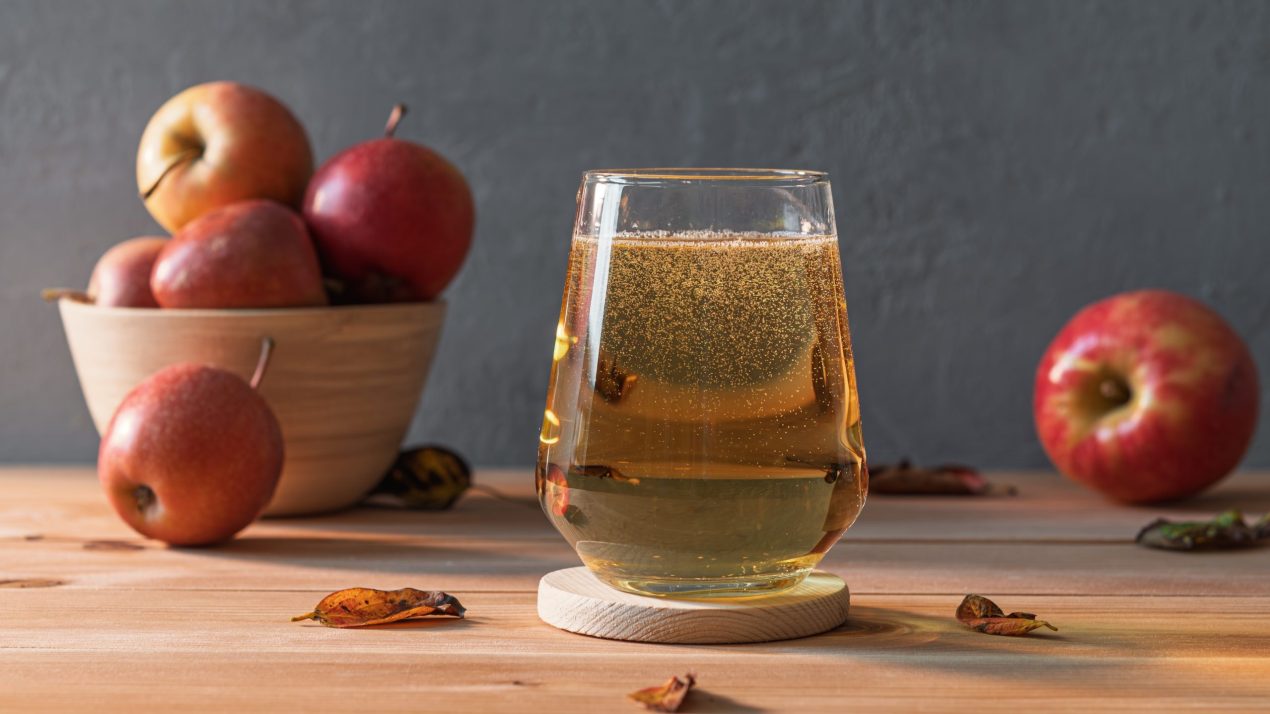
While neither Deirdre Birmingham nor her husband grew up in agriculture, they both had the common interest of growing a farm business. Her degrees in agriculture and an opportunity to purchase farmland in the Driftless area gave birth to The Cider Farm. She tells the Mid-West Farm Report about their unique philosophy on making cider.
When the duo set out to build their business, they approached cider making with a wine producer’s mindset. Recognizing that high-quality cider requires specific fruit rather than standard table apples, they sought out European cider varieties valued for the tannins, mouthfeel and complexity they impart during fermentation. However, when they started in 2003, these specialized English and French apple trees were not sold commercially in the United States. Regardless, the couple learned the delicate art of hand-grafting from a grower in Edgerton, Wisconsin, matching thin layers beneath the bark of varietal scion wood to dwarfing rootstock to clone and create their own trees from scratch.
The Process
Starting a business by hand-making an entire orchard proved to be a slow and deliberate adventure. Unlike mass-produced American ciders, which often rely on table apples or imported juice concentrates from countries like Turkey and China, Birmingham’s operation prioritizes craftsmanship and quality over low costs. The grafting process was essential because apple seeds produce genetically unpredictable offspring. “So every seed you plant is going to be something different, maybe something related to the parent. So it means that if you want a specific variety, you have to do this kind of cloning process, if you will,” Birmingham explained that they wanted the reliable outcome that is expected from grafting. The trees proved highly susceptible to a potentially lethal bacterial disease far more prevalent in the U.S. than in Europe, turning the farm into a continuous learning experience.
Today, the ongoing labor of love at The Cider Farm requires constant seasonal maintenance to protect the trees and ensure a high-quality yield. Late-summer work involves carefully pruning out bacterial infections—or removing entire trees when the disease spreads too far—alongside summer pruning to increase light exposure and manage vigorous growth. Despite the financial risks and physical demands of mowing, orchard upkeep and disease management, Birmingham’s commitment to growing specialty fruit has paid off in industry awards and recognition.
Leave a Reply