
Farmers know how to grow food in Wisconsin. But what if one of the biggest challenges isn’t producing it, instead it’s finding enough opportunities to sell it?
That is a huge concern being raised by Kriss Marion. The first-generation farmer from Blanchardville says state regulations and limited access to local markets are making it harder for small and medium-sized farms to succeed. She believes Wisconsin has an opportunity to change that, and wants state leaders — including candidates running for governor — to focus on building stronger local food systems and giving farmers more ways to earn a living.
“Farmers need more freedom, more opportunities to succeed in local markets,” Marion said. “With uncertainty surrounding global trade and international markets, more farmers are interested in selling closer to home. Create local markets, and help farmers have Wisconsin markets that make sense.”
LISTEN to the complete discussion which first aired as part of the Mid-West Farm Report’s “Lunch on the Hill” series:
Building local markets could strengthen Wisconsin small towns
Marion says state lawmakers can help farmers by investing in local meat processing, expanding farm-to-school programs, and making it easier for farmers to sell their products to schools and other institutions.
The COVID-19 pandemic demonstrated how important these connections can be. When traditional supply chains were disrupted, consumers began looking for food from nearby farms. But some farmers lacked access to local processors or other infrastructure needed to meet that demand. And Marion believes rebuilding those connections would benefit more than agriculture.
“If local farms are getting more access to local markets, that strengthens small towns too,” she said.
She believes Wisconsin could become a national leader in locally produced food, where consumers can easily purchase products directly from farmers.
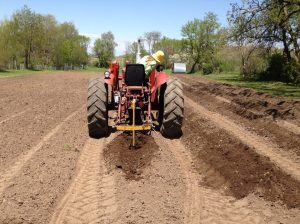
(Photo: Kriss Marion working the land on her farm)
Could ice cream, camping, and farm experiences help save family farms?
For some Wisconsin farms, staying profitable could mean finding new ways to use what they already produce or the land they already own. A dairy farm might begin making ice cream or yogurt. Another farm could offer a few campsites or welcome visitors for special events.
But Marion says regulations are making these opportunities difficult to pursue.
“We are a very difficult state to innovate in, in terms of small and medium scale farms,” she explained. “But in neighboring Minnesota, farmers can find state-supported information about cottage food businesses, agritourism, and small-scale equipment.
Marion would like Wisconsin to provide similar resources to help farmers understand the requirements before investing in a new business.
Wisconsin Farmers Union pushes for cottage food changes
Michelle Ramirez-White, government relations director for Wisconsin Farmers Union, is working with a variety of partners on what she describes as a food freedom legislative package. One priority is improving Wisconsin’s cottage food laws, which affect people selling certain homemade food products.
Ramirez-White says farmers and other home-based food entrepreneurs need clearer rules about what they can sell, where they can sell it, and how much they can earn.
“We need a fair cottage food law on the books to protect these very legitimate home businesses,” she says.
She also questions proposals to limit how much income those businesses can generate, arguing that the practical limitations of working from a home kitchen already restrict production. The issue, she says, is attracting interest from people across the political spectrum because it involves consumer choice, small-business opportunities, and government regulation.
Smaller dairy processors could get another look
Another priority involves Wisconsin’s rules for on-farm dairy processing.
Ramirez-White says Wisconsin Farmers Union wants lawmakers to revisit ATCP 65, the state’s dairy regulations, to consider whether smaller processors could operate under licensing requirements better suited to their size.
She argues that a family dairy farm making a limited amount of ice cream or yogurt for local customers faces regulatory challenges that can be difficult to manage. One possibility would be a separate license for smaller, community-focused dairy processors.
“The goal is to give dairy farmers another income opportunity while helping them keep their operations in the family for another generation,” Ramirez-White explained.
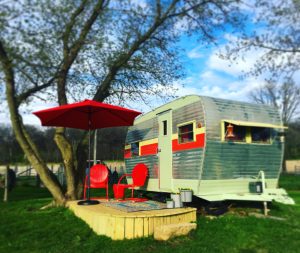
(Photo: A retro-camper on Kriss Marion’s farm)
Wedding barns and farm camping are part of the conversation
Agritourism is another area Wisconsin Farmers Union wants lawmakers to address.
Ramirez-White says changes to alcohol regulations have made it more difficult for some wedding barns to operate. Depending on their business arrangements, venues may face limits on events or additional licensing requirements.
The organization is working with partners, including the Wisconsin Agricultural Tourism Association, to address those concerns.
Marion also points to regulations affecting small farm camping operations. She says farmers who want to offer just one, two, or three campsites can face requirements designed for much larger campgrounds. For a farmer simply hoping to welcome a few visitors and generate some extra income, she believes those requirements can discourage investment.
Both Ramirez-White and Marion see agritourism as an opportunity to bring additional dollars into rural Wisconsin while introducing more people to agriculture.
What’s next for Wisconsin farmers?
Wisconsin Farmers Union is developing plans to bring its food freedom proposals to state lawmakers. The ideas include clearer cottage food laws, a review of small-scale dairy processing regulations, changes affecting wedding barns and farm camping, and stronger investment in local food infrastructure.
For Marion, the larger goal is making sure Wisconsin farmers have enough options to remain profitable, particularly when traditional farm income is uncertain. And she believes the state already has the farmers, products, and communities needed to build a stronger local food economy.
What it needs now, she says, are policies that make those opportunities easier to pursue.
“Let’s build our reputation, how you can come to Wisconsin and buy directly from local farmers. We need more opportunities for those local sales,” Marion said.
Leave a Reply