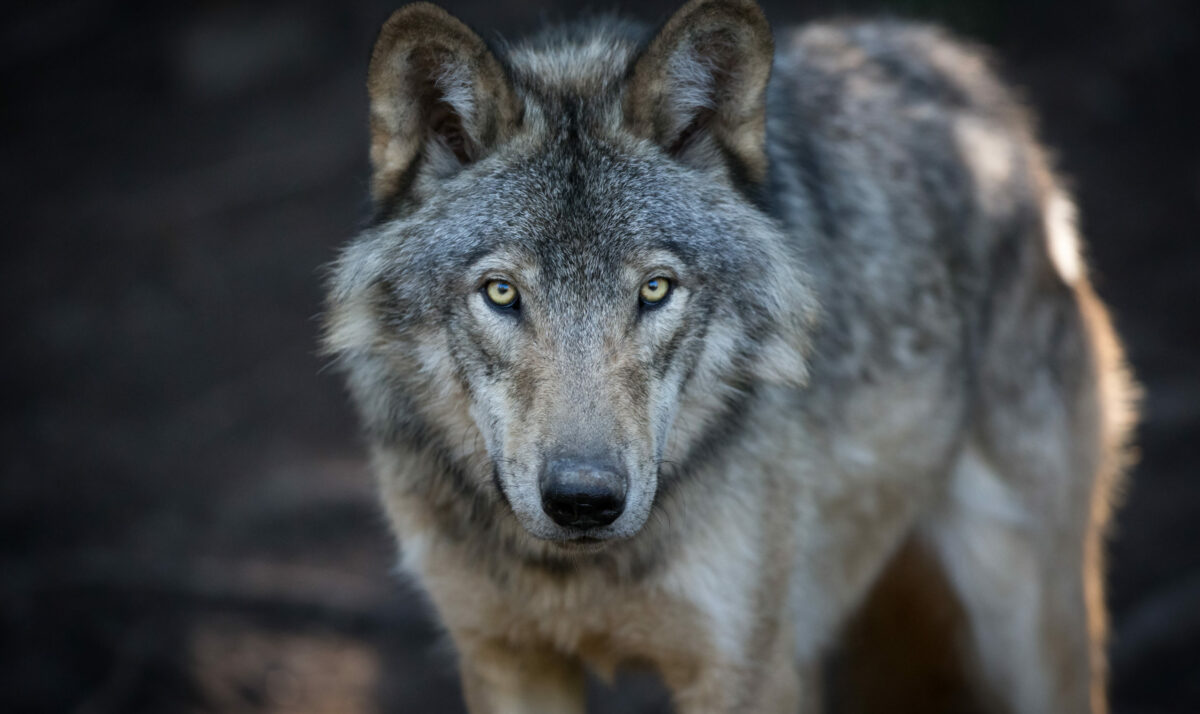
A group representing Wisconsin’s bear hunters says the state needs to bring back wolf hunting.
Wisconsin Bear Hunters’ Association says the recent killing of nine wolves in Price County by the Department of Natural Resources (DNR) following verified threats to human health and safety underscores the need for Wisconsin to reinstate a regulated wolf hunt.
Wolves Fear People Less
The DNR authorized the removal of the wolf pack after six verified human safety conflicts were reported in the area between July 2025 and August 2026. The agency attempted nonlethal deterrents, but those efforts failed to resolve the problem. The DNR also determined that relocating the pack was not feasible.
The incidents included reports of wolves approaching people and homes at close range, demonstrating the challenges wildlife officials face when wolves become increasingly accustomed to human presence. “When wolves begin exhibiting behavior that threatens the safety of Wisconsin citizens, the state must have the tools necessary to address that threat before someone gets hurt,” said Carl Schoettel, President of the Wisconsin Bear Hunters’ Association. “Any one of these instances could have concluded in a much more devastating manner.” He says, “ The Price County situation demonstrates why Wisconsin needs to manage its wolf population in the same manner in which we manage all other predators- a well-regulated hunt. Lethal removal of an entire pack should not have been the only viable option.”
The WBHA maintains that Wisconsin needs to reinstate a regulated wolf hunt as part of its broader wildlife management strategy. A carefully managed hunt would provide wildlife officials with a key tool in the management of the wolf population, enabling the state to respond to changing conditions, and helping to maintain a balance between wolves, other wildlife, and the people who live, work, hunt, and recreate in Wisconsin’s forests. The WBHA urges Wisconsin’s state and federal policymakers to pursue a path toward reinstating a regulated wolf hunt in Wisconsin. A responsible management framework should prioritize public safety, use the best available science, and provide wildlife officials with effective tools to manage wolf populations sustainably.
Federal Officials Also Want Additional Wolf Management
Recently,. USDA Secretary Brooke Rollins urged state partners to review their wolf management policies, strengthen engagement with livestock producers, and work with the U.S. Department of Agriculture (USDA) to address wolf predation following an executive order by President Trump. She says, “For too long, America’s ranchers have dealt with wolves threatening and killing their livestock, their livelihoods, and the family operations they have spent generations building.” Rollin urges states to listen to their livestock producers, review state-specific wolf protections, and work with USDA wherever possible.
What’s New For Livestock Losses?
Wolf predation can increase producers’ costs through livestock losses, management expenses, and reduced livestock weights. Under the Working Families Tax Cuts Act, USDA’s Farm Service Agency increased Livestock Indemnity Program (LIP) payment rates for qualifying predation losses to 100% of the determined market value. Eligible producers who lose livestock to qualifying wolf attacks should contact their local Farm Service Agency office for eligibility and application information.
Leave a Reply