
The Midwest Center of Excellence for Vector Borne Disease (MCEVBD) is one of two CDC Centers of Excellence (COEs) in Vector-Borne Diseases to share nearly $3 million funding research into innovative approaches for reducing tick populations and lowering people’s encounters with ticks and the risk of tickborne disease. The award, announced last week, is from the Centers for Disease Control and Prevention (CDC) and the National Institutes of Health (NIH).
The research efforts are part of a new initiative from the U.S. Department of Health and Human Services (HHS) to address how the nation combats ticks and tickborne diseases, including Lyme disease and alpha-gal syndrome. The MCEVBD, headquartered at UW–Madison, and the New England Center of Excellence in Vector-borne Diseases will conduct the work.
New Initiative
The new HHS initiative will focus on two areas: “super baits” for rodents and deer feed treated with a specialized pesticide for ticks called an acaricide. The MCEVBD is overseeing work in both areas. UW–Madison and collaborators in the Connecticut Agricultural Experiment Station will pursue the super bait work, while center partners at Michigan State University will conduct deer research.
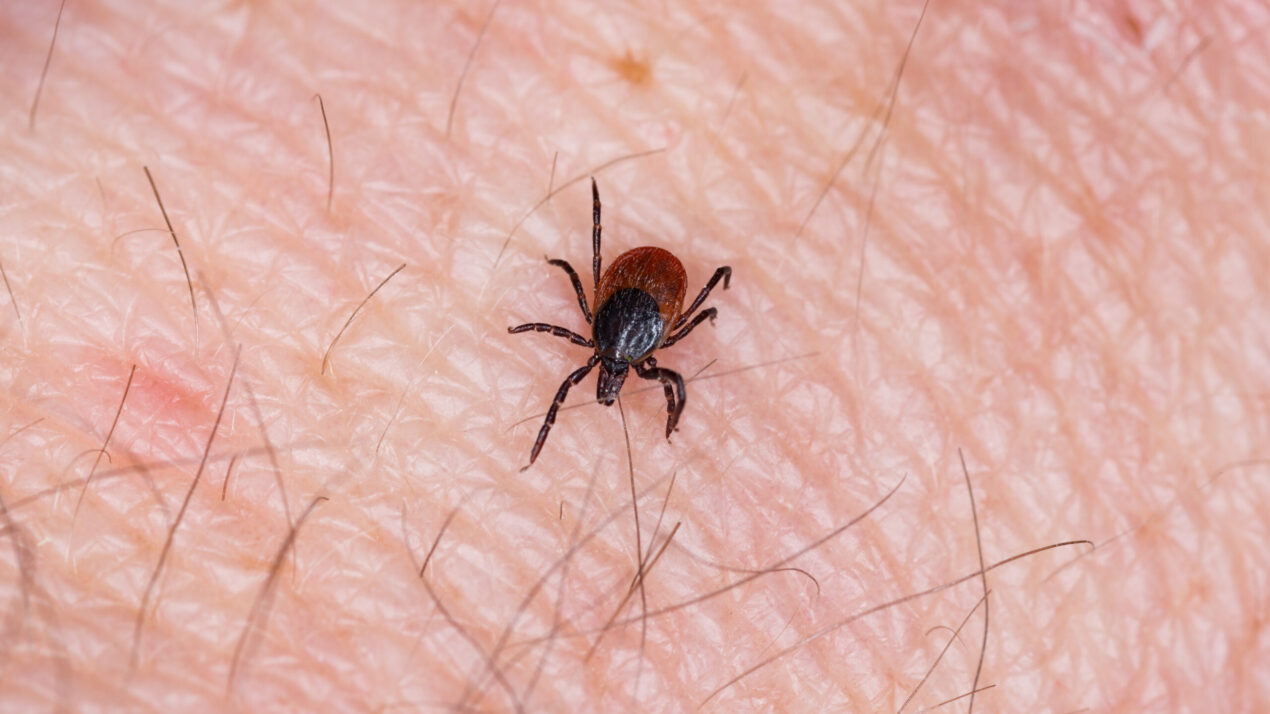
Rodents are key hosts for juvenile blacklegged ticks and key sources of the pathogen that causes Lyme disease. Ticks feed on rodents and pick up the pathogens. Bait boxes can deliver rodent feed containing either acaricide, antibiotics, or a combination. The combined “super baits” would both kill ticks feeding on treated rodents and reduce the number of animals carrying the pathogen. Thus, eliminating a source of infection for ticks.
“The MCEVBD has developed expertise in looking at ticks on small mammal hosts,” says Lyric Bartholomay, co-director of the MCEVBD and professor of pathobiological sciences at the UW–Madison School of Veterinary Medicine. “We’ve capitalized on many great resources at UW–Madison to design new bait boxes, and the idea is to broaden the types of small mammals that can get into the boxes and get treated with anti-tick medication. We want to reduce the number of ticks and the risk that people and pets will come in contact with them.”
Partner Studies
UW’s academic partners at Michigan State University are studying how to manage the role of deer in tick populations and disease. Deer sustain tick populations and are a point source of adult tick reproduction. Ticks thrive when they can feed on deer and, in turn, will produce large numbers of eggs. Researchers are investigating the feasibility of orally distributing an acaricide to deer at scale. The goal is to disrupt the tick life cycle and prevent females from producing eggs.
Tick Bites
Tick bites can cause serious and sometimes deadly diseases. Every year, nearly 31 million people in the United States may be bitten by a tick. More than half a million Americans are diagnosed with tickborne diseases. Cases of tickborne disease are on the rise, and ticks are spreading to new areas throughout the country. Protecting people from tickborne diseases takes both personal prevention and community-level tick control.
Leave a Reply