
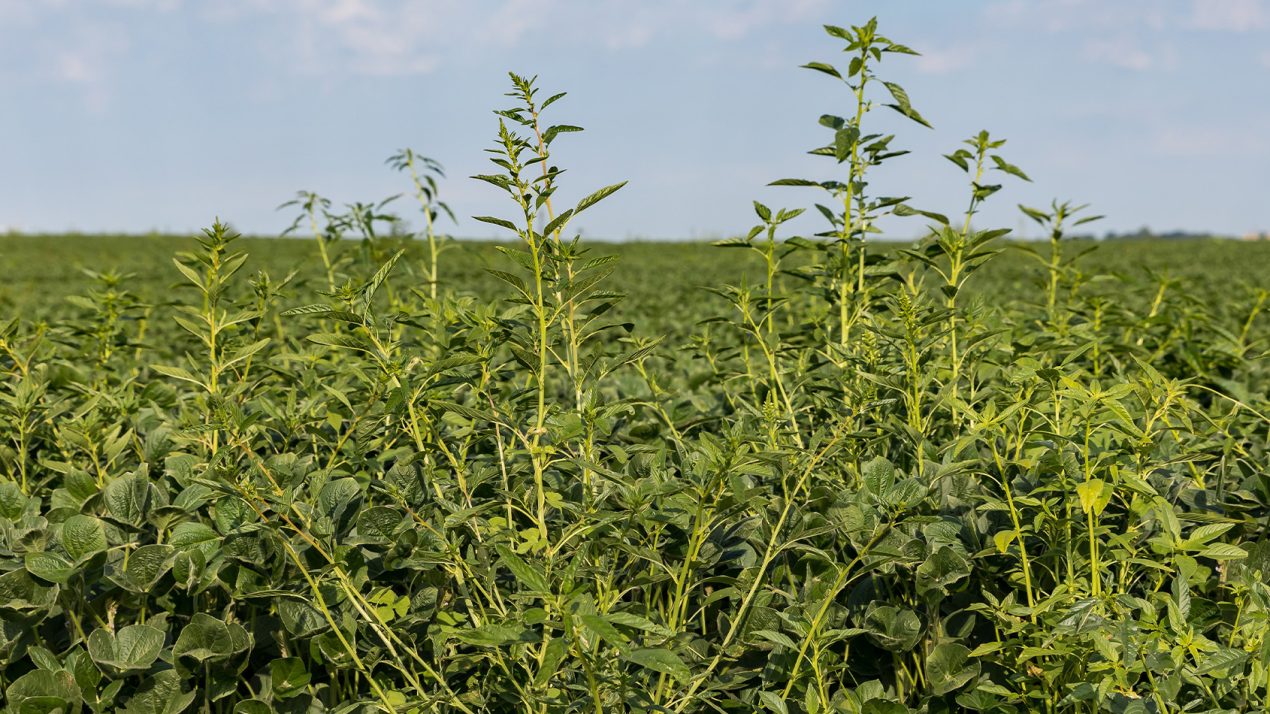
As combines roll across Wisconsin fields this fall, growers and custom applicators are seeing firsthand where weed management programs held strong and where late-season escapes slipped through. Rodrigo Werle, UW–Madison Extension Weed Specialist, tells Pam Jahnke he’s particularly focused on fields where waterhemp continues to stand out.
Werle says waterhemp has become the state’s top weed challenge—especially along field margins, headlands, and wet spots. He notes that with the harvest actively underway, NOW is when critical information on escapes should be collected.
The danger of ignoring field edge escapes
Werle understands that it’s tempting to keep the combine moving and ignore a few large weeds along the edge of an otherwise clean field. However, he’s quick to point out how that can spread an already difficult problem. He says running a combine through mature waterhemp turns it into a high-powered seed spreader. A single, chest-high, female waterhemp plant growing in a Wisconsin soybean field can produce up to 100,000 seeds. Isolated female plants along headlands or field margins without crop competition can disburse up to 500,000 seeds. Driving a combine straight through a thick patch drags these massive seed loads directly across clean acres, restarting the infestation cycle.
Understanding the four-year seed bank challenge
UW–Madison Extension research shows that waterhemp seeds survive in the soil seed bank for four to five years. Achieving a low-level weed seed bank takes four consecutive years of strict management and zero seed return. Letting even a few mature plants scatter seeds during harvest resets that four-year clock.
Practical action steps for active harvest
To counter this threat, Werle has these suggestions. Simple adjustments during active harvest. Taking a brief pause to hand-pull tall female waterhemp plants along field borders before harvesting prevents massive seed loads from entering the combine. Growers should also harvest their cleanest fields first before going into known problem areas. That avoids dragging weed seeds into clean ground. Finally, spending just 30 minutes cleaning out equipment between fields pays huge long-term dividends by stopping the transfer of weed seeds across farms.
Connecting field observations to future research
The UW–Madison Extension weed science team relies heavily on feedback from Wisconsin farmers, agronomists, and crop consultants during the harvest. Field observations now could directly shape future applied research projects at UW–Madison. Taking a few minutes today to pull edge escapes and clean equipment protects your land investment and keeps Wisconsin fields cleaner for seasons to come.

Leave a Reply