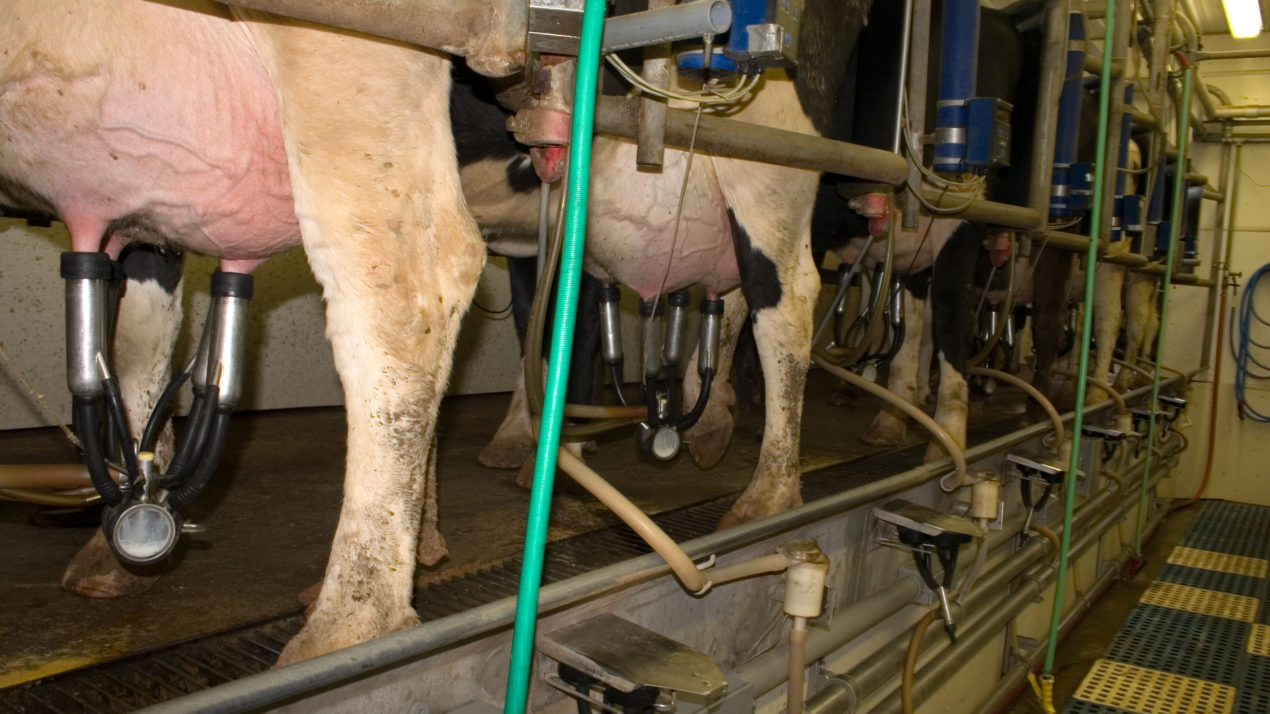
Dairy farmers in Wisconsin are still being monitored for the highly pathogenic avian influenza (HPAI), but state officials are testing fewer milk samples than they did earlier this year. And the change is intentional.
Wisconsin moved to a reduced testing frequency after maintaining an “Unaffected” status under the U.S. Department of Agriculture’s National Milk Testing Strategy.
The Wisconsin Department of Agriculture, Trade and Consumer Protection (DATCP) indicates surveillance is continuing, using milk samples already collected through routine testing programs.
What does this mean for Wisconsin dairy farmers?
One of the biggest changes for you, as a farmer, is that lactating dairy cattle moving from Wisconsin to another state — no longer need an individual HPAI test before interstate movement. The state currently has Unaffected State Status under the federal testing program.
Wisconsin officials also rescinded its previous state order requiring individual HPAI testing for lactating dairy cows attending fairs and exhibitions. This means cows coming from Wisconsin do not need an individual HPAI test to attend fairs or exhibitions in the state. However, the order may still have an impact if you are coming from a state that does not have Unaffected State Status.
Testing numbers are lower than earlier this year
Wisconsin began participating in the National Milk Testing Strategy in 2025 and reached unaffected status in September 2025. The state maintained that status again in March 2026. More than 58,000 milk samples have been tested through the program. Officials with DATCP say the samples represent nearly all licensed Wisconsin dairies, with additional verification continuing to ensure statewide coverage. Testing has also dropped from the levels seen earlier this year.
The decrease in testing should not be interpreted as evidence that HPAI cases have increased or decreased. It simply reflects a change in the state’s surveillance schedule.
Wisconsin has one reported livestock detection
According to the DATCP website, there is one confirmed HPAI detection in livestock other than poultry. The state will continue to monitor for additional cases through the milk-testing program.
Nationally, USDA reports that during the most recent 30-day period, HPAI was confirmed in 19 poultry cases across seven states and four livestock cases across two states.
What farmers should do
DATCP officials are encouraging farmers to continue using strong biosecurity practices, along with watching your herds and flocks for signs of disease. You should also report herds or flocks showing unexplained illnesses to DATCP.
The agency also recommends continued attention to biosecurity, particularly when animals, people or equipment move between farms.
The bottom line
Wisconsin’s HPAI testing program hasn’t gone away—it has changed.
The state is testing fewer milk samples because Wisconsin has maintained unaffected status under the USDA’s National Milk Testing Strategy. At the same time, DATCP says surveillance continues and farmers remain eligible for reduced federal movement-testing requirements.
Leave a Reply