
There is something deeply meaningful about food making its way home. A Wisconsin farmer grows it. A food pantry shares it. A family needs it. Thanks to a program called Connecting Farms to Families, those three pieces are coming together in communities across the state.
It’s being led by the Hunger Task Force in Milwaukee, and started with a $2.5 million grant through the Wisconsin Department of Agriculture, Trade and Consumer Protection (DATCP). The goal was straightforward: use the state’s investment to buy food directly from Wisconsin farmers and producers and get that food into the hands of people experiencing food insecurity.
But according to Hunger Task Force CEO Matt King, something bigger is happening. The program is creating connections, as hoped, but it’s also changing how farmers, food assistance organizations, and families see one another.
Listen as Teri Barr talks with Hunger Task Force CEO Matt King about “Connecting Farms to Families” here:
From Wisconsin farms to food pantries
The state funding comes from Wisconsin’s 2025-27 budget. Hunger Task Force is using 100% of the grant to purchase food from small and mid-sized, family-owned farms and producers all across the state. That food is then provided free of charge to food assistance organizations in local communities.
So far, the program has purchased food from 582 farmers and producers in 66 Wisconsin counties. And the list is as diverse as agriculture itself: ranchers, cheesemakers, dairy farmers, fruit and vegetable growers, egg producers, and grain farmers.
These are people already working to feed their neighbors. Many sell at their area farmers markets, working with grocers and distributors, and in many cases donating to their local food pantries. Connecting Farms to Families is giving them another customer. It’s one that creates a reliable market for their products while helping those products reach people who might otherwise never be able to afford them.
“It’s a win-win,” King said.
And there is something particularly powerful about the idea of a farmer being paid for the food they produced while someone in their own community gets to enjoy it.
More than a transaction
The numbers tell a part of this story. The Hunger Task Force has provided grants and food resources to more than 230 food assistance organizations across Wisconsin, including six tribal nations in 58 counties. But King says the most important part may not be measured in dollars or pounds of food.
It’s the relationships being built.
Local organizations that might not otherwise have the resources to purchase fresh meat or produce can now offer those foods to the people they serve. And farmers aren’t simply selling a product into an anonymous supply chain. They’re helping feed people who live in their local communities.
“For the producer side, the meaning and the value that comes along with this program is not merely financial,” King explained. “And that sense of purpose has become one of the most meaningful parts of the program.”
Farmers know where their food is going.
Food assistance organizations know where the food is coming from.
And families get access to fresh, nutritious food that was grown or produced much closer to their home.
Keeping Wisconsin food dollars in the state
King believes those connections will last long after the current grant ends. And he shared that the original state investment has already attracted another $2.5 million in private funding. This will allow the Hunger Task Force to expand and increase the program’s impact.
Now, the hope is — to keep building on that momentum. It could mean continued state support, more private donations and, ultimately, more Wisconsin-grown food being purchased by food assistance organizations.
For farmers, that creates an additional market.
For rural communities, it keeps more food dollars circulating locally.
And for families, it means greater access to food that is fresh, nutritious, and connected to the place they call home.
King sees that as an investment in both Wisconsin agriculture and Wisconsin communities.
“Preserving the dignity of everyone”
There is another piece of the program that matters to King. And it’s something that doesn’t show up on a spreadsheet.
Dignity. People who need help putting food on the table shouldn’t have to give up the ability to eat good food.
“There’s a real shared value around dignity and preserving the dignity of everyone in our community,” King said.
That idea runs through Connecting Farms to Families. The program isn’t simply about filling empty pantry shelves. It’s making sure the food available to people who need assistance is the kind of food everyone deserves to eat.
Fresh vegetables.
Wisconsin meat.
Cheese and dairy products.
Eggs.
Food grown and produced by people who live and work in the same state.
And that matters even more at a time when families are feeling the rising cost of nearly everything.
King, who is a Wisconsinite himself, says the state’s agricultural heritage makes the work especially personal.
“Our ag heritage is really important to me personally, and I know that’s true for most people in our state,” he said.
He also recognizes what many Wisconsin families are facing right now. Working families are under pressure. Older adults living on fixed incomes are making difficult decisions. And sometimes, food becomes one of the places where families have to make those choices. Being able to help both sides of that equation is what makes the program so exciting for him.
A connection worth keeping
There is a beautiful simplicity to Connecting Farms to Families. A farmer has food to sell. A community has people who need food. The program creates the bridge.
And along that bridge, something else is happening: people are learning that hunger relief and agriculture don’t have to exist in separate worlds. It can help strengthen each other. And ultimately, the goal is bigger than this one program. It’s about creating a food system where more Wisconsin food stays here. And the people producing that food can help feed the people living right alongside them.
“To support small business and then also to ensure that our neighbors have access to healthy food, it’s incredibly exciting,” King said. “And we’re really proud to steward this.”
Perhaps that’s the heart of it. Wisconsin farms feeding Wisconsin families — while reminding all of us just how connected we really are.
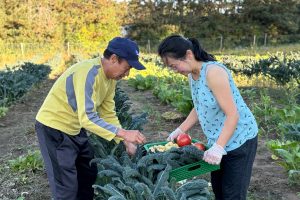
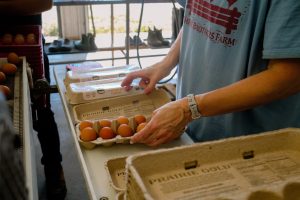
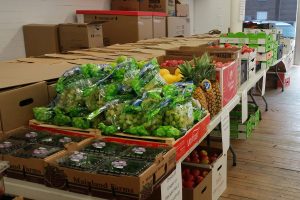
(Photos provided by Hunger Task Force and the “Connecting Farms to Families” program:)
- GreenGold Gardens, Wausau
- Prairie Gold, Oconomowoc
- West Central Wisconsin Community Action Agency, Boyceville
Leave a Reply