
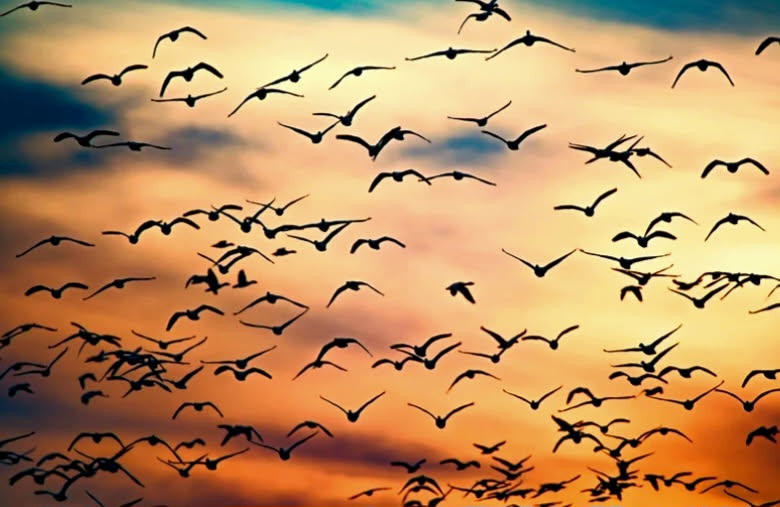
If you step outside on a September night and look up, you probably won’t see the traffic. But high above Wisconsin, millions of birds are on the move. And this year’s migrations is already making a big impression.
Historical weather radar data shows September 3 through the 30th is the peak fall migration period over most of Wisconsin. Northern parts of the state typically see migration a few days earlier.
BirdCast and Purdue AeroEco Lab scientists estimate that more than 98 million birds passed over Wisconsin during peak flight on the night of September 9. Another 84 million were recorded during peak migration on September 12. Additional waves are predicted during the nights ahead, including Thursday, September 17.
A simple way to help migrating birds
Many of the birds making the journey south are songbirds, which migrate at night. It’s also when artificial light can become a problem.
Bright outdoor lights can disorient migrating birds and draw them toward buildings and windows. Once they’re pulled into urban and residential areas, the risk of deadly collisions increases.
Research published in 2024 estimates that up to 3.5 billion birds are lost to window collisions each year in the United States.
Turning off unnecessary outdoor lights between 11 p.m. and 6 a.m. during migration can help reduce that risk.
The Lights Out Alerts issued by BirdCast and Purdue AeroEco Lab are designed to identify nights when especially large numbers of birds are expected to be moving through an area. Alerts are issued when predicted bird traffic is in the top 10% of migration nights for a particular location. Typically, there are only eight to 10 nights during a migration season.
You don’t have to be a birder to take part
Nighttime lights can affect birds during migration, but seeing the results of that migration doesn’t require staying up until midnight.
A free event in Dane County on Saturday, September 19, is an opportunity to experience birding in whatever way works for you.
Birding Your Way will be held from 9 a.m. to 1 p.m. at Fish Camp County Park in McFarland.
It’s designed to make birding welcoming, inclusive, safe, and accessible. You can sit and watch, walk through the park, get advice on bird photography or visit educational booths from groups including SOS Save Our Songbirds.
SOS has a number of other events across the state and you can find a listing here.
Look up — and turn the lights down
Fall migration is one of those natural events happening all around Wisconsin that can be easy to miss. Millions of birds can pass overhead while people below go about their evening routines, often without ever realizing the scale of the journey taking place above them.
But you can play a small role in making that journey safer. Turning off unnecessary outdoor lights could be one of the easiest things you can do for the birds.
And if you want to see who’s making the trip, BirdCast’s Wisconsin migration dashboard offers a way to follow the nightly movement and gives a sense of just how much wildlife is traveling overhead.
Leave a Reply