
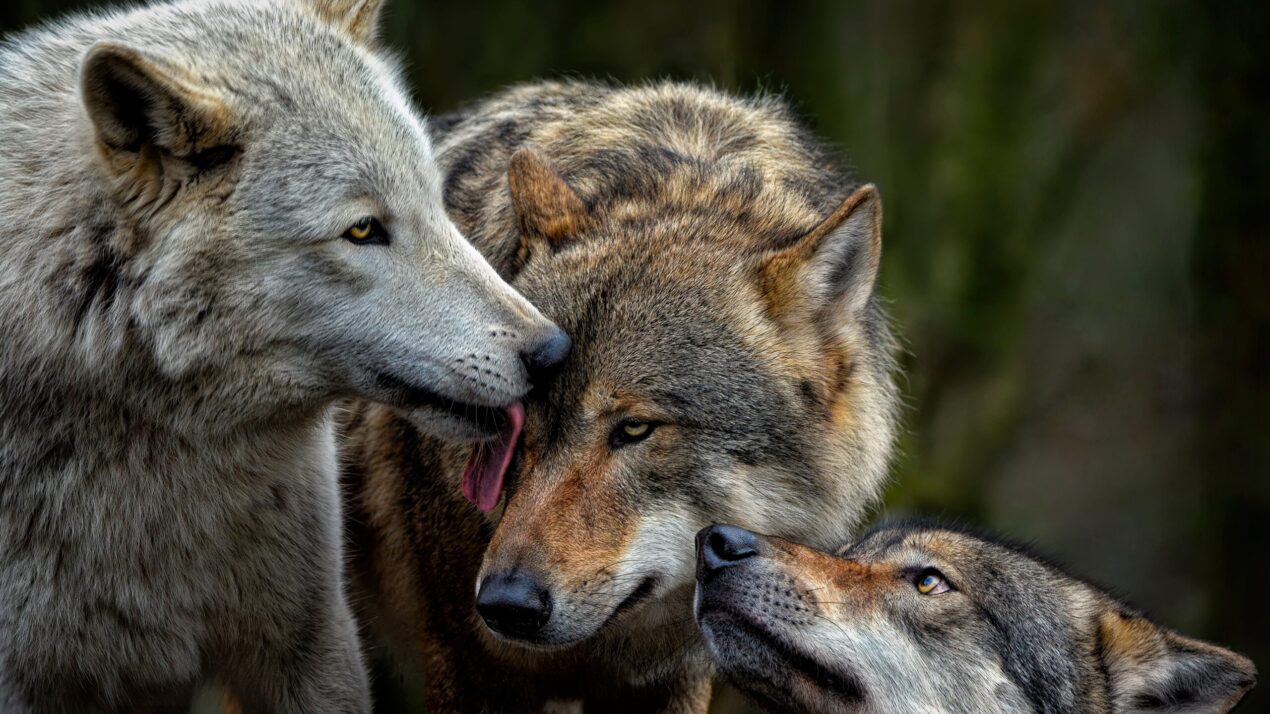
A new study from researchers at the University of Wisconsin-Madison could add another layer to the state’s long-running debate over how to manage gray wolves. It examines wolf population-control efforts in Michigan, Slovenia, Slovakia, Latvia, and Israel. The results indicate that killing wolves to prevent livestock losses is highly unpredictable. And in some cases, it increased domestic animal deaths.
Adrian Treves, a UW-Madison environmental studies professor and co-author of the study, believes the findings may help inform future policy discussions in Wisconsin.
Officials with the Wisconsin Department of Natural Resources (DNR) currently estimate the state’s wolf population is at a little more than 1,100. They note this is a 5% decline from the previous year. Wolves remain federally protected, which means hunting and lethal depredation control are prohibited.
Researchers point to pack disruption
Treves points at one possible explanation for the study’s findings — what happens when members of an established wolf pack are killed. If wolves are removed, it can disrupt pack structure or cause a pack to split.
“It can bring new or uncoordinated wolves into an area,” Treves explained. “Those wolves may be more likely to target easy and predictable food sources, including livestock.”
Treves cites the research as showing nonlethal tools, including livestock guardian dogs and people monitoring their herds, may have a better result, rather than broad population-control efforts.
“That’s not how anyone has ever succeeded in lowering farm animal losses,” Treves said.
Wolf management remains a Wisconsin issue
Wisconsin’s last wolf hunt was held in 2021. 218 wolves were killed in less than three days. No hunts have been held since federal protections were restored in 2022.
But, the state continues to deal with wolf depredation claims. The DNR is considering changes to the state’s depredation-payment system because available funding may not cover all claims through this current fiscal year. Now proposed rules could include limits, prioritization of claims, and prorated payments.
This puts wolf management among the issues state lawmakers will continue debating. What is the best way to balance a recovered wolf population — with the safety of livestock.
Leave a Reply