Headlines have had a large influence on meat markets, according to the market update from Jeff Swenson, livestock and meat specialist at the state Department of Agriculture, Trade and Consumer Protection.
The update draws information from several sources, including trade publications, radio broadcasts, agricultural news services, individuals involved in the industry as well as USDA NASS and AMS reports.
Futures contracts were lower last Friday on news of an ICE raid at a Nebraska meat processing establishment. Markets reversed course Monday on news that the Trump administration would pause raids on farms and meat-packing plants. War between Iran and Israel caused nervousness regarding future energy costs, and the markets turned lower again.
The Iowa Department of Agriculture and Land Stewardship has confirmed the state’s first case of Theileriosis, caused by Theileria orientalis Ikeda (a protozoan parasite that infects red and white blood cells), in a herd of cattle in southeast Iowa. Theileriosis causes anemia in cattle that can lead to death. The parasite is carried by Asian longhorned ticks, and cases generally occur when cattle are introduced to new pasture. The tick is expected to make its way northward, and cattle farmers are encouraged to closely monitor their herd on pasture.
June Live Cattle contracts have been trading at a discount to the cash market with less than two weeks to converge. Negotiated cattle trade was sharply higher in the South and mostly steady in the North. The Five-Area Weighted Average was $237.50, but some trades were reported at $240-$242/cwt.
The Choice beef cutout was $377.88 last Friday and $388.87 this Wednesday.
Show lists were larger this week, but still small enough that packers will again struggle to fill their needs.
Harvest last week was estimated at 558,000 head, 24,000 fewer than the prior week and 57,000 fewer than last year. Year-to-date harvest is 6.2% below last year, with beef production 2.9% lower.
Prices
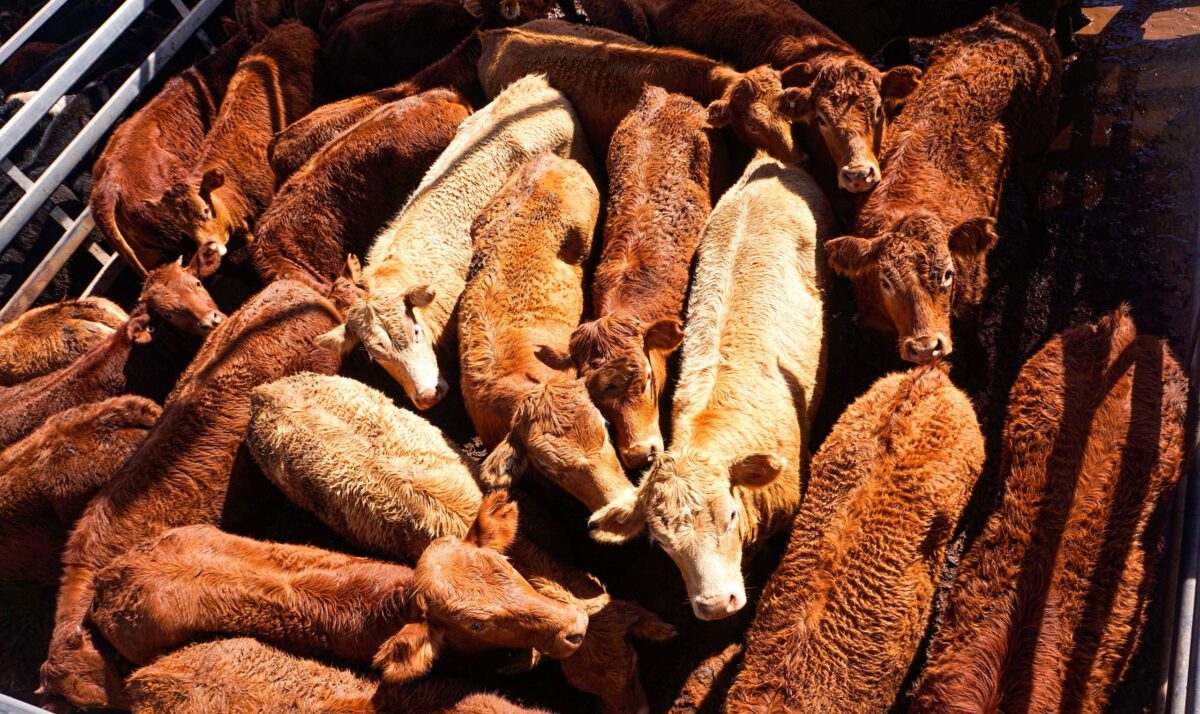
High Choice and Prime beef breed steers were mixed this week. Top quality steers and heifers were selling from $218 to $238/cwt with reports of some to $240/cwt. Choice steers and heifers ranged from $200 to $218/cwt. Holstein steers were steady. High-grading Holstein steers brought $190-$210/cwt. Lower grading steers brought $160-$190. Silage-fed, under-finished or heavy dairy breed steers brought $90-$160/cwt. Dairy x Beef steers were steady and strong, bringing $168-$217 with some higher.
Cows were mostly steady. Most cows brought $111-$142/cwt with some to the low $150s. Lower-yielding cows brought $70-$110/cwt. Doubtful health and thin cows brought up to $70/cwt.
Dairy breed bull calves were steady, selling from $600 to $1,150/head with some heavier, well-managed calves selling to $1,400/head. Dairy breed heifer calves were steady, bringing $300-$900/head with a few higher. Beef and Beef Cross calves were steady, selling from $700 to $1,650/head. Light and lower quality calves sold up to $60. New crop lambs brought $170-$218/cwt.

Leave a Reply