
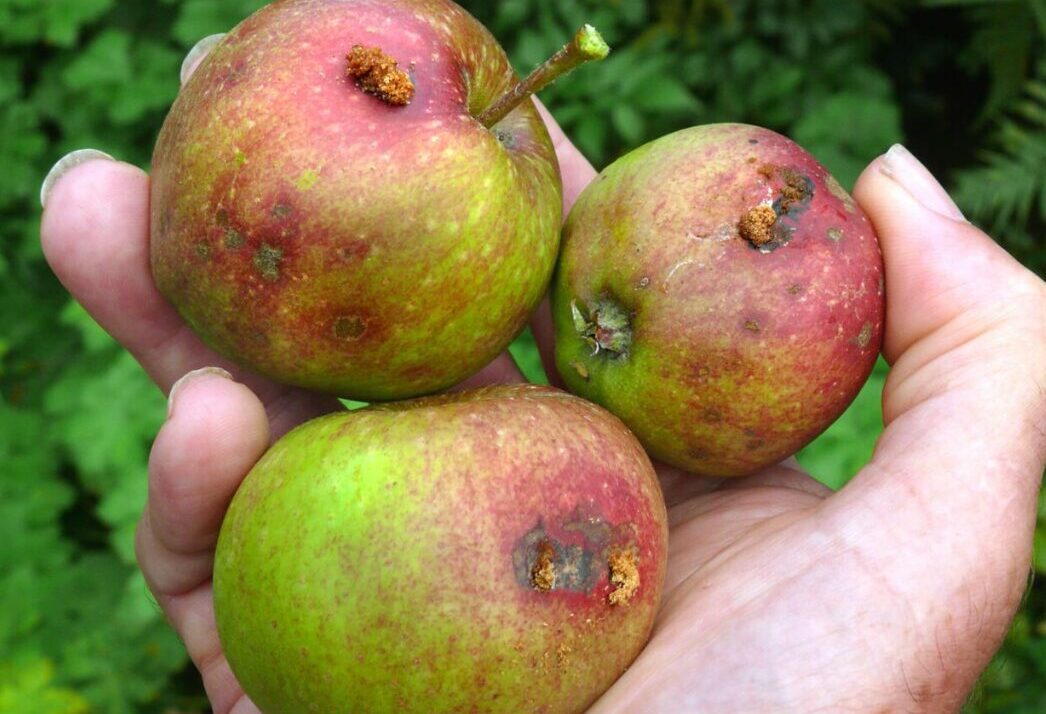
Pictured: Codling moth damage. Photo by Patrick Clement
Another season of orchard insect reporting has ended, with significant apple maggot and codling moth activity still occurring at some cooperating sites.
Although it is not necessary to send in insect counts after Aug. 29, apple growers can expect lingering pest pressure throughout harvest and are advised to maintain traps until late September, according to the Department of Agriculture, Trade, and Consumer Protection’s Pest Survey Program.
Apple Maggot
Despite surplus rain earlier this season, apple maggot pressure has not been particularly high, as is usually the case during wet summers. Trap counts peaked July 19-Aug. 1 and have been variable this month, with a few orchards reporting large weekly captures of 15 flies per red sphere trap. Meanwhile, other sites have not trapped a single apple maggot fly.
The external depressions and brown, internal larval tunnels resulting from this pest are now appearing on infested fruits. Continued monitoring of traps for at least two more weeks is suggested since the flies are still active and could cause problems in late-ripening apple varieties.
Codling Moth
As for codling moth activity in orchards, the second-generation flight has declined markedly, but a few orchard locations continued to register above-threshold counts (five or more flies per trap per week) in the past week. The cooperators in Columbia, Fond du Lac, and Oneida counties reported captures of five, six, and eight moths per trap, respectively.
The codling moths now flying will produce more larvae into September, which could pose a threat to Honeycrisp and other late season varieties. Orchards that have recorded large summer-generation moth flights should continue trap checks since counts in September can be an indicator of spring moth pressure and damage potential by the first generation of larvae next June.
Learn more: https://datcp.wi.gov/Pages/Programs_Services/AppleOrchardPests.aspx

Leave a Reply