
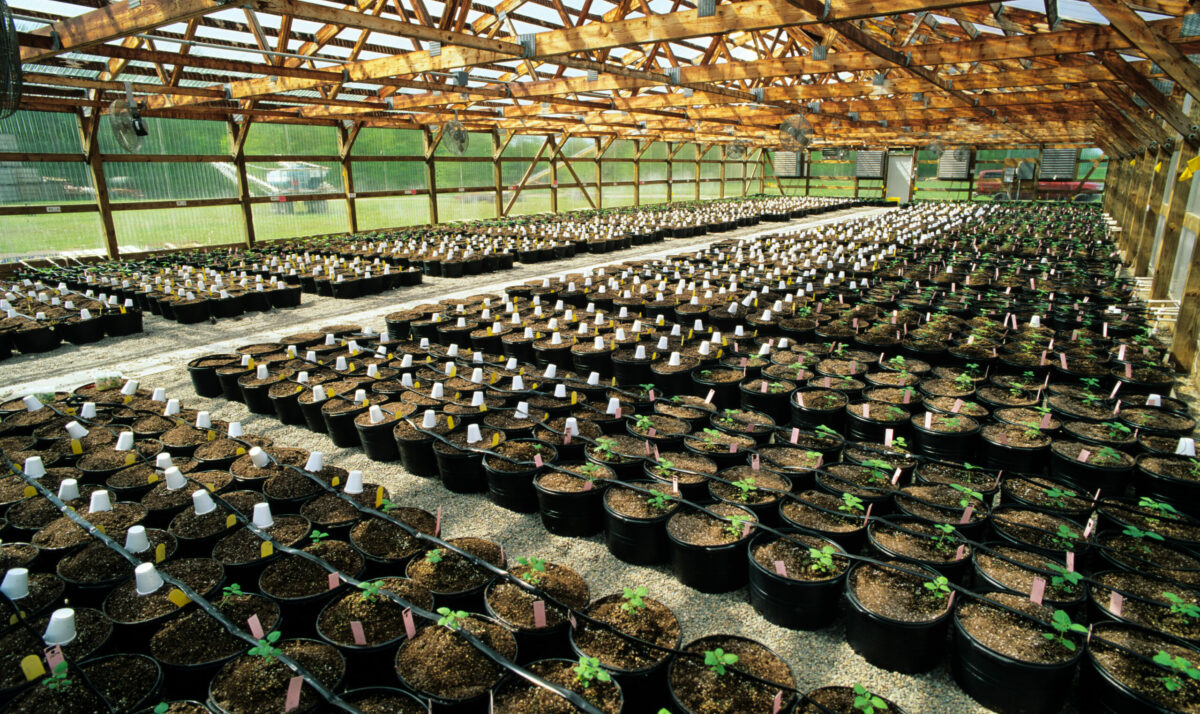
Pictured: Potato plants are seen at the Lelah Starks Elite Foundation Seed Potato Farm west of Rhinelander in this undated photo. Photo by Wolfgang Hoffmann/UW–Madison CALS
UW-Madison has a new partner to improve the efficiency of seed potato production at the Starks Early Generation Seed Potato Farm in Rhinelander. The farm, part of the university’s Seed Potato Certification Program, produces early generation seed potatoes for Wisconsin producers and other farmers for a fee.
This fall, a group of four seed potato growers including Eagle River Seed Farm, Baginski Farms, Schroeder Brothers Farms, and J.W. Mattek & Sons joined together into the Wisconsin Potato Coalition to assume operations of planting, growing, and harvesting seed at the Starks Farm for crop year 2023 and beyond. The growers have decades of production and business experience between them.
Under the new arrangement, the private WPC will manage the approximately 100 acres of early generation seed potatoes along with several hundred acres of rotation crops. The WPC’s goal is to provide clean, early-generation foundation seed to the Wisconsin potato industry. University scientists and inspectors with the Wisconsin Seed Potato Certification Program will continue to utilize their expertise in plant pathogens, disease management and diagnostics to perform the early steps in the seed potato production process and to oversee overall testing and certification for the program.
“This new public-private partnership capitalizes on the strengths of both partners,” says Amanda Gevens, professor and extension specialist in the plant pathology department and the current administrative director of the certification program.
As outlined in Wisconsin Administrative Code, the cooperative certification program between DATCP and UW requires the university to certify seed potatoes based on their cleanliness and varietal type. Scientists in the Department of Plant Pathology in the College of Agricultural and Life Sciences oversee the program and ensure an adequate supply of high-quality seed potatoes for Wisconsin’s $350 million potato industry.
“Our coalition is excited to provide this service for the Wisconsin industry,” says Kevin Schleicher, director of WPC and director of sales for Wysocki Family of Companies. “Local potato farms are strongly positioned in the national potato industry when we have a clean, quality source for early generation seed in Wisconsin.”
The WPC will contract with seed potato customers each winter to determine the quantity and varieties of seed potatoes to cultivate at Starks Farm. They will then plant, raise, harvest and store the certified seed potatoes. Scientists and the coalition members will continue to partner on research at the farm, and the university will continue to manage the onsite greenhouses, including production of minitubers.
The 1,000-acre Starks Farm includes roughly 400 tillable acres surrounding a 40-acre spring fed lake. It is a good location for seed potato production due to the presence of fertile sandy loam soil, isolation from adjacent potato farms, and exposure to harsh winter temperatures which kill many plant pathogens. Approximately 100 acres of potato are grown in rotation each year.
Leave a Reply