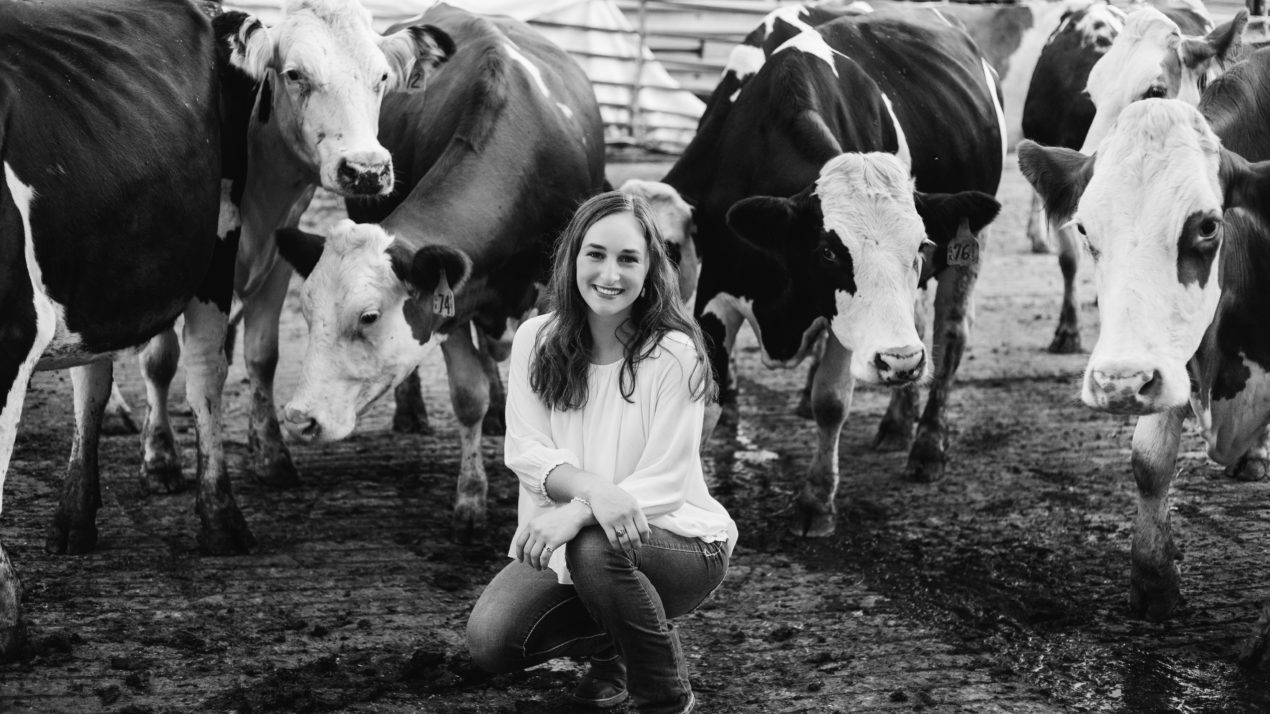
When you look across dairy farms in Wisconsin, what type of dairy breed do you see the most? If you answered Holstein, you are correct. Holsteins are the most common breed in Wisconsin. On our family farm, we have always had Holsteins, black and white as well as red and white. However, in 2013 my father wanted to expand our herd and find something different to integrate into our herd’s reproduction. My father was introduced to Fleckvieh, a German breed of cattle. After doing more research on the breed, my father contacted a Fleckvieh breeding supplier and we started cross breeding our Holstein cattle with Fleckvieh semen. We decided to go with this breed because we were looking for genetics that would serve as dual purpose, for high quality milk components and meat. Also, Fleckvieh cattle are a shorter breed which is good for grazing. As an organic dairy, we are regulated to graze our cattle on pasture for a certain number of days. Cattle that are a little shorter makes it easier for them to graze.

One of our Normande – Holstein crossbreds, Granite. 
Here is Lulu, one of our Fleckvieh – Holstein crosses. 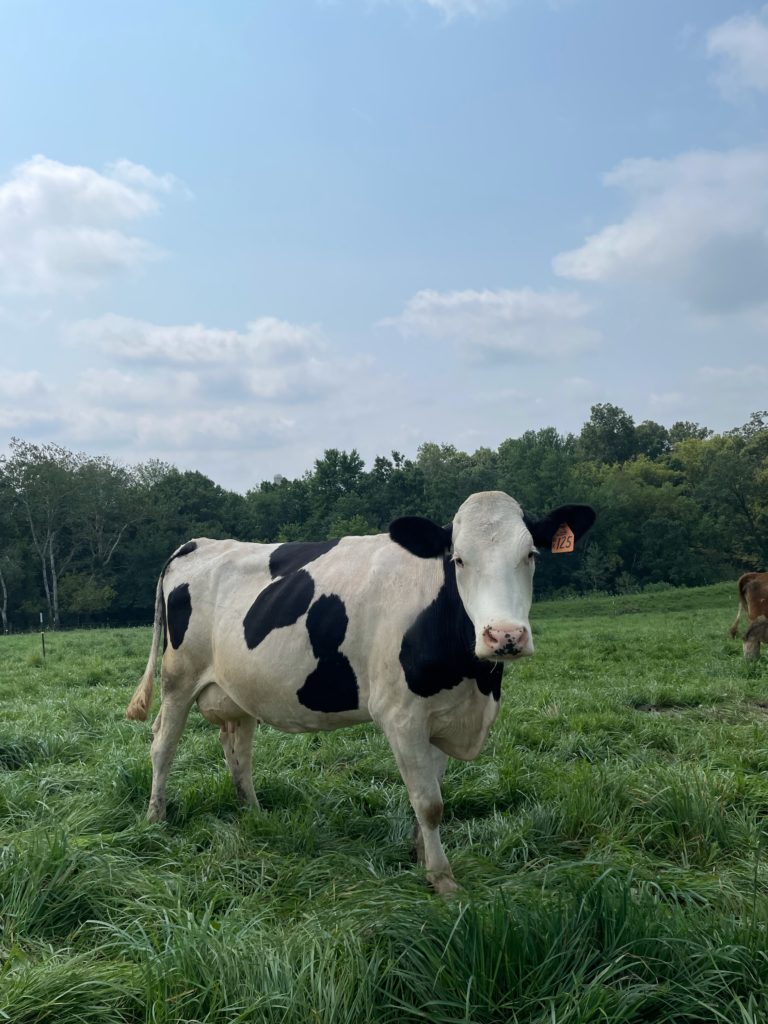
This is Dory, a Montbeliarde – Holstein crossbred.
We also added Normande and Montbeliarde genetics, two French breeds of cattle, to the herd in 2014. These two breeds are also known for high quality milk components, good meat, great for grazing and have a high longevity. After raising our first couple of crossbred cattle and calving them into the herd, we noticed a positive change in our herd’s milk components, such as fat and protein. In 2018, we added another cross breed, Swedish Red. This breed is known for calving ease as well as quality milk components, meat, and grazing.
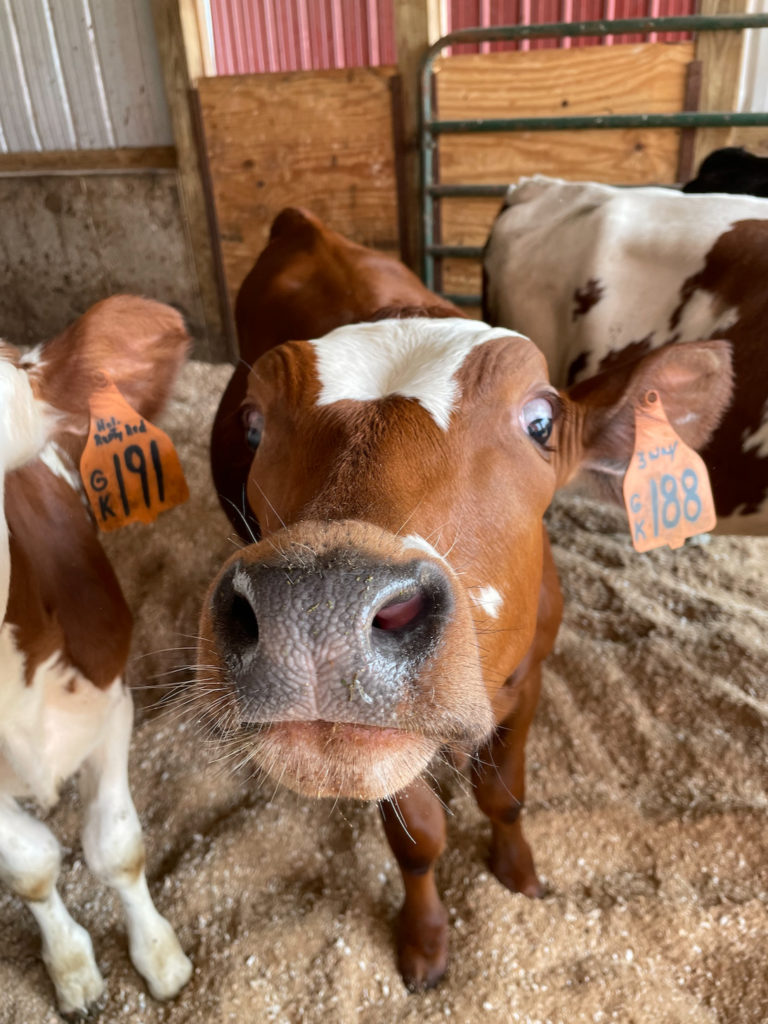


Our end goal of cross breeding was to get a three-way cross. That means we start with Holstein, breed twice with the European breeds, and then go back to Holstein.
So far, we have been very happy with the addition of European cattle genetics in our herd. With better grazing, milk components, meat, calving ease and longevity, our herd is doing very well. If you would like to learn more about cross breeding and why we do it, feel free to leave me a message or contact me!
Leave a Reply